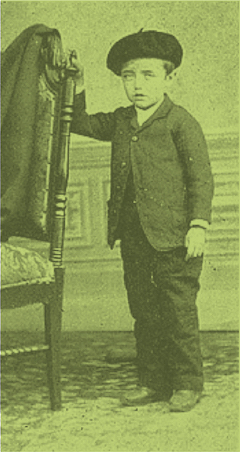
»» Alfonso Daniel Rodríguez Castelao was born in 1886 in Rianxo, a town on the Arousa estuary. His father, a professional sailor, emigrated to Argentina three months after his son was born and would not see him again until 1896, when the family met in La Pampa, in the town of Bernasconi, where they had a grocery store.
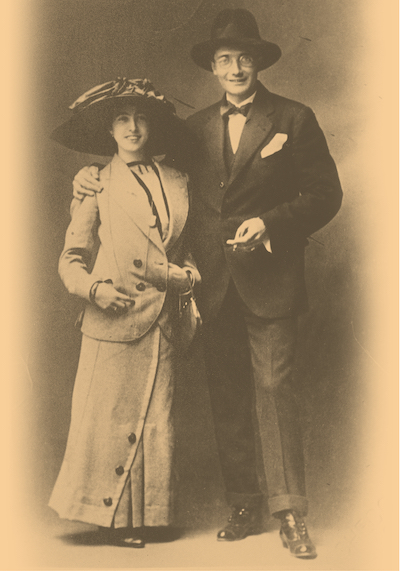
»» His whole family returns to Galicia in 1900 and Castelao goes to high school and then studies Medicine in Santiago de Compostela, marrying Virxinia Pereira in 1912 Their life together lasted for 38 years, until this native to Rianxo died.
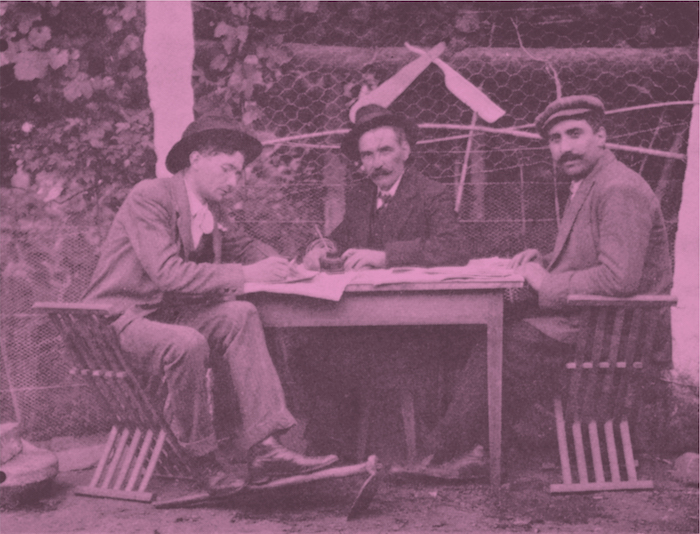
»» Between 1910 and 1914, he was immersed in the fight for the political regeneration of Rianxo, headed by his father Mariano, and he was going to become one of the editors of El Barbero Municipal, portrayed in this photograph in which Castelao appears on the left. He publishes sixteen drawings that he uses as a political weapon in this newspaper.
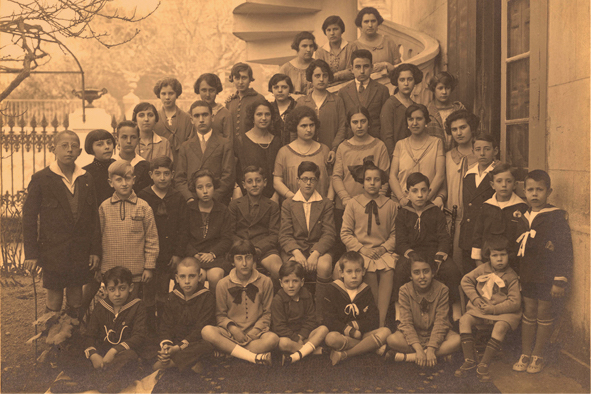
»» Since 1916, Castelao lives with his wife, Virxinia Pereira, in Pontevedra, after earning a place on the technical staff of the Geographical and Statistical Institute, and also working as an assistant professor of drawing at the institute. In 1928, at the age of fourteen, his son Alfonso died of pneumonia, in the centre of the photograph, with glasses, among the students of the Poza de Pontevedra Academy.
Photo by Pintos, courtesy of the Museum of Pontevedra.
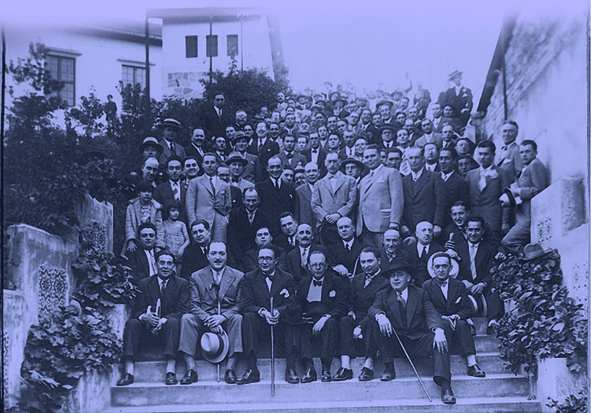
»» His political evolution led him first to regenerationism and agrarianism. In 1916 Irmandades da Fala (Brotherhood of the Language) emerged, to which he joined in Pontevedra in 1917. The generation of 1916 is a nationalist political project that will continue with the Partido Galeguista (Galicianist Party) in 1931. In the photograph, taken in Vigo in July 1930, he appears in the first row, among other Galicianists.
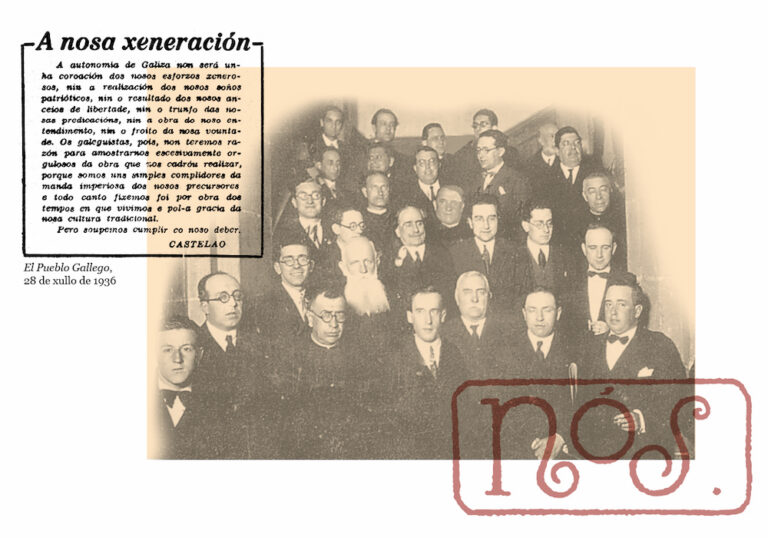
»» Culture and politics will always be intertwined in the work of Castelao and his companions. The literary magazine Nós was published in Ourense in 1920 . The native to Rianxo collaborated on it and served as artistic director together with Vicente Risco, the literary director. The publication gives name to a whole generation of intellectuals. In the picture: meeting of the Seminario de Estudos Galegos (Seminar of Galician Studies), an institution created in 1923.
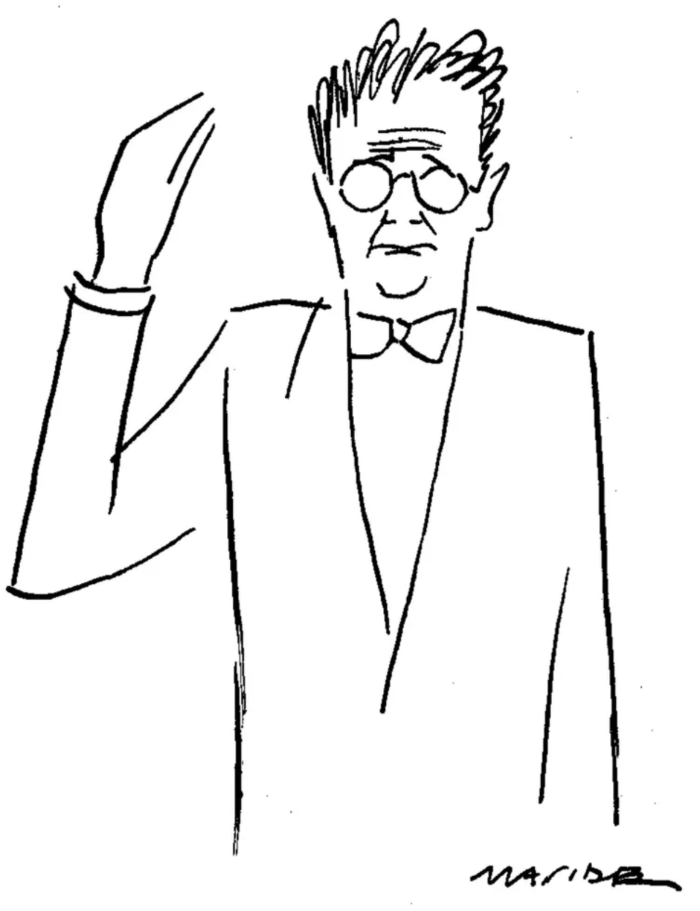
»» The growing participation in public life, his oratory skills and his popularity led to his election as a deputy in the Parliament in 1931. Since then, his activity will be decisive in the achievement of the Statute of Autonomy of Galicia, approved in a plebiscite in 1936. After twenty days, the fascists take up arms. In the drawing: Castelao by Carlos Maside in 1930.
Courtesy of the Maside family.
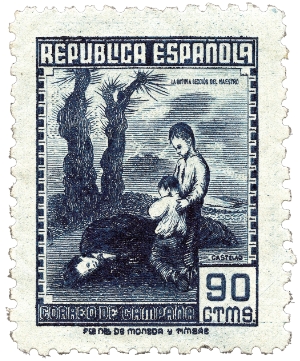
»» In 1936, the Civil War started while Castelao was as a deputy in Madrid, where he had gone to present the result of the Statute of Autonomy of Galicia. From there, from Valencia or from Barcelona, he will participate in the fight against the military coup, against fascism and in the propaganda and defence of the Republic, publishing the three albums of war drawings. From the drawing A derradeira lección do mestre (The Last Lesson of the Teacher) comes this postage stamp of the Republic.
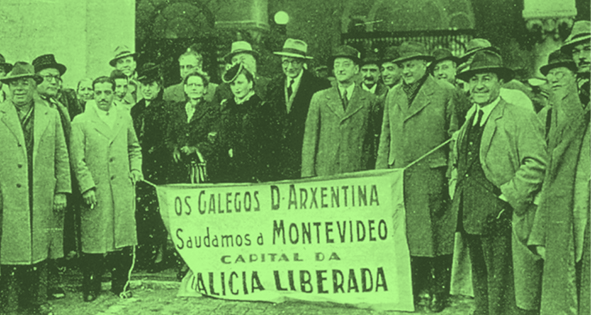
»» Exiled in New York since 1938, his activity for the benefit of the Republic led him to travel through the United States, Cuba and the Soviet Union. His exile took him to Buenos Aires in 1940. He was the president of the National Council of Galicia since 1944 and he will be appointed Minister of the Government of the Republic in exile, living in France from 1946 to 1947. In the centre of the photo, Castelao and his wife, Virxinia Pereira.
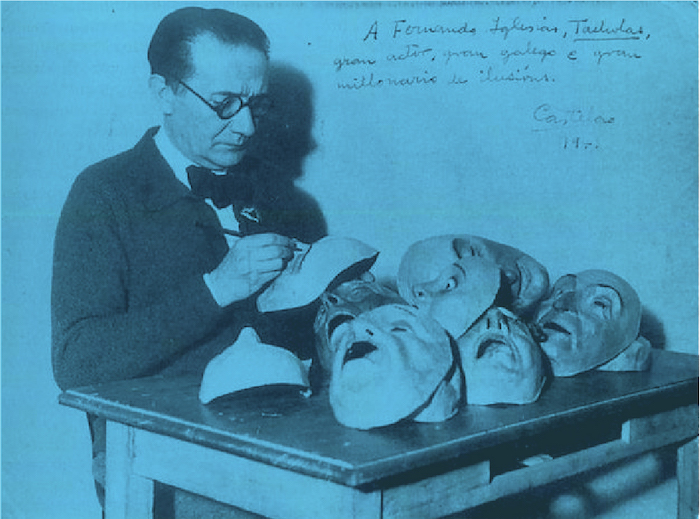
»» His political commitment reduced his artistic and literary work during exile. Even so, in 1941, he premièred in Buenos Aires the mask play Os vellos non deben de namorarse.
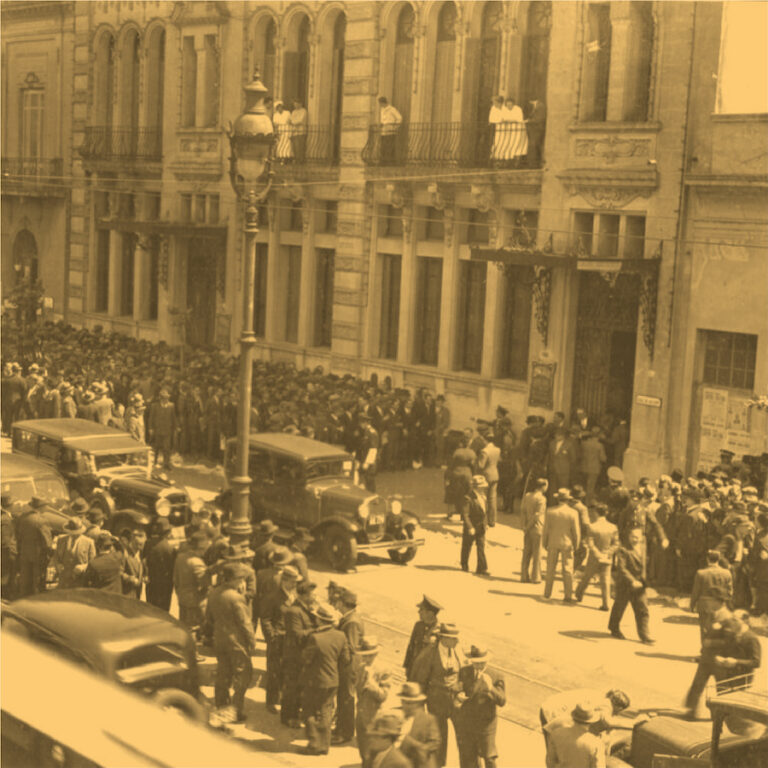
»» Castelao died of lung cancer on January 7, 1950 in Buenos Aires. He is the first Galician nationalist to die in exile. In the photograph: concentration of people in front of the sanatorium of the Centro Gallego, in Buenos Aires, on the day of his death.
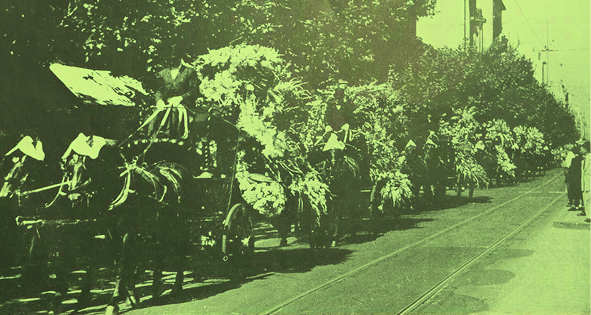
»» A dozen floats full of flowers and many private cars paralysed the traffic of the Belgrano avenue in Buenos Aires. On January 9, 1950 the funeral procession went to the Chacarita cemetery and Castelao was buried in the pantheon of the Centro Gallego as the leader of a town. His remains were transferred to Santiago in 1984, resting in the Pantheon of Galicia in Bonaval.